




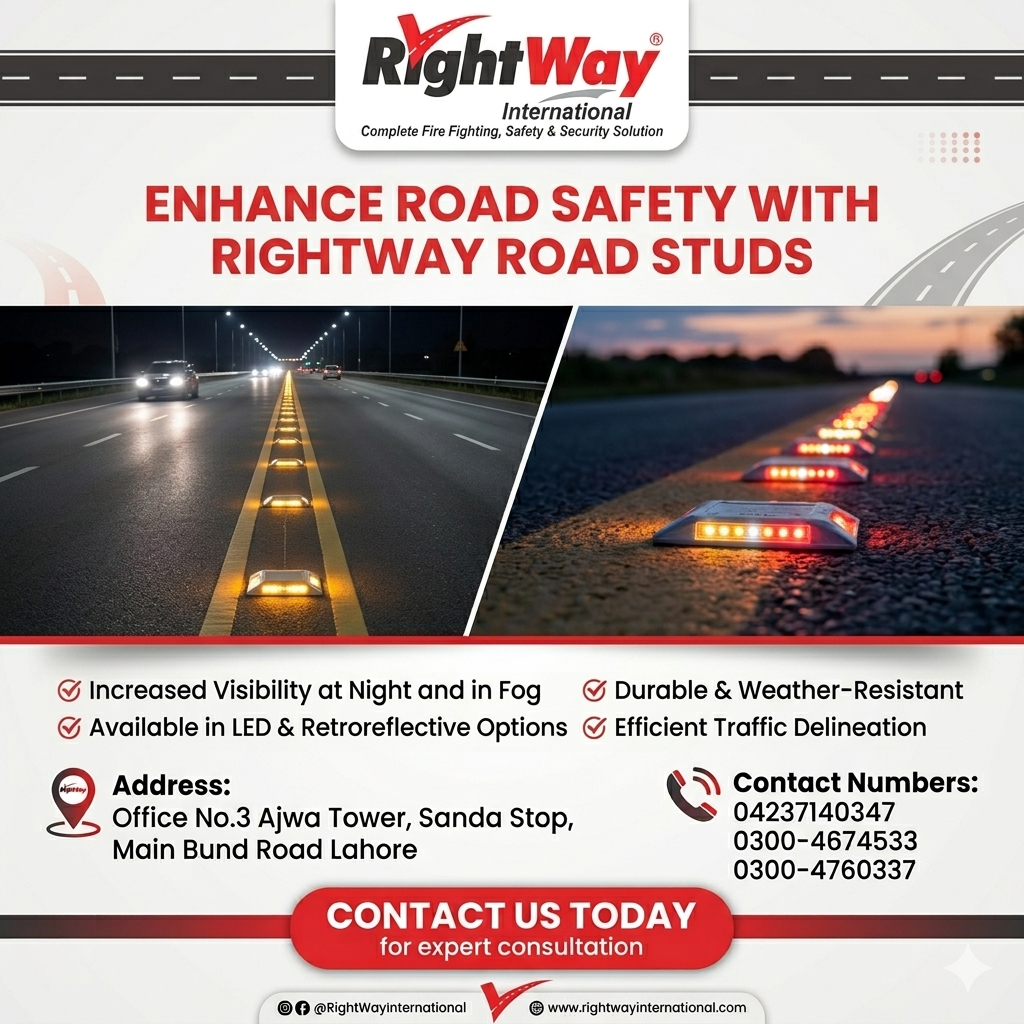
Road Safety Studs are highly visible roadway guidance devices designed to improve lane visibility, enhance driver awareness, regulate traffic movement, and increase road safety under all weather and lighting conditions. These essential traffic safety devices help prevent accidents, improve lane discipline, reduce roadway departures, enhance night-time visibility, and support safer transportation infrastructure in accordance with applicable road safety regulations, transportation engineering standards, and traffic management guidelines. as Per Occupational Safety and Health Administration (OSHA) Standers.
Road safety studs are widely used on highways, expressways, city roads, bridges, tunnels, roundabouts, intersections, airport runways, industrial facilities, parking areas, construction zones, and transportation infrastructure projects to improve traffic guidance and roadway safety.
As traffic volumes continue to increase globally, road safety studs play a critical role in intelligent transportation systems, accident prevention programs, roadway visibility enhancement, traffic safety initiatives, lane management strategies, and smart infrastructure development. They support compliance with transportation authority requirements, road engineering standards, highway regulations, and public safety objectives.
What Are Road Safety Studs?
A Road Safety Stud is a raised pavement marker installed on road surfaces to provide visual guidance and lane delineation for drivers. These devices contain reflective elements, LED lights, or solar-powered illumination systems that improve road visibility during darkness, fog, rain, and adverse weather conditions.
Road safety studs are commonly used for:
- Lane guidance
- Roadway delineation
- Traffic channelization
- Highway safety
- Night-time visibility enhancement
- Curve warning systems
- Accident prevention
- Road edge marking
- Intersection guidance
- Tunnel safety
- Bridge safety
- Construction zone traffic control
- Smart transportation systems
- Driver awareness improvement
- Road hazard identification
Reflective Road Stud Systems
Reflective road stud systems are commonly used for:
- Lane marking enhancement
- Highway traffic guidance
- Road edge delineation
- Vehicle lane positioning
- Night driving safety
- Roadway visibility improvement
- Traffic flow management
- Urban traffic control
- Rural road safety
- Smart road infrastructure
- Hazard zone identification
- Transportation safety programs
- Driver guidance systems
- Traffic engineering projects
- Sustainable transportation solutions
Road Safety Equipment
Road safety equipment is commonly used for:
- Traffic regulation
- Accident prevention
- Vehicle guidance
- Road hazard warning
- Pedestrian protection
- Highway safety management
- Construction zone safety
- Traffic monitoring
- Driver awareness enhancement
- Public infrastructure safety
- Transportation management
- Emergency response support
- Lane visibility improvement
- Compliance with safety standards
- Roadway risk reduction
Key Components of Road Safety Studs
A typical road safety stud system includes:
- Reflective lenses
- High-intensity reflectors
- Durable housing body
- Aluminum casing
- Polycarbonate shell
- Solar panel module
- LED illumination system
- Rechargeable battery
- Mounting anchors
- Adhesive fixing materials
- Weather-resistant coating
- Anti-slip surface
- Impact-resistant structure
- Waterproof seals
- Reflective optical elements
- Smart communication modules
- Sensor integration systems
- Visibility enhancement technology
How Road Safety Studs Work
Road safety studs improve roadway visibility by reflecting vehicle headlights or generating illumination through integrated LED systems.
Step 1: Vehicle Approach
A vehicle approaches the roadway section equipped with road safety studs.
Step 2: Light Reflection
Reflective lenses capture and reflect vehicle headlights toward drivers.
Step 3: Visibility Enhancement
The reflected light clearly outlines lanes, curves, road edges, and traffic paths.
Step 4: Driver Guidance
Drivers receive visual guidance and maintain proper lane positioning.
Step 5: Improved Road Safety
Enhanced visibility helps reduce accidents and improves overall traffic flow.
Types of Road Safety Studs
1. Reflective Road Studs
Use reflective materials to return vehicle headlight beams toward drivers.
2. Solar Road Studs
Contain solar panels and LED lights for active illumination.
3. LED Road Studs
Use electrically powered LED lighting systems for maximum visibility.
4. Aluminum Road Studs
Heavy-duty studs designed for highways and high-traffic areas.
5. Plastic Road Studs
Lightweight and economical pavement markers.
6. Ceramic Road Studs
Highly durable studs with excellent wear resistance.
7. Glass Road Studs
Provide superior reflective performance and visibility.
8. Bi-Directional Road Studs
Offer visibility from two traffic directions.
9. Uni-Directional Road Studs
Provide visibility for one traffic direction only.
10. Smart Road Studs
Integrated with sensors and intelligent transportation systems.
Common Applications of Road Safety Studs
Safety studs are widely used in:
- Highways
- Expressways
- Urban roads
- Rural roads
- Intersections
- Roundabouts
- Bridges
- Tunnels
- Airport runways
- Parking facilities
- Industrial facilities
- Logistics centers
- Construction zones
- Smart city projects
- Public transportation corridors
Road Traffic Lights
Road traffic lights are commonly used for:
- Traffic control
- Intersection management
- Vehicle flow regulation
- Pedestrian crossing control
- Highway traffic management
- Railway crossing safety
- Road congestion reduction
- Accident prevention
- Public safety enhancement
- Urban transportation management
- Smart city infrastructure
- Emergency vehicle prioritization
- Lane control operations
- Construction zone traffic control
- Transportation system efficiency
Importance of Road Safety Studs in Transportation Systems
Road safety studs are fundamental components of modern roadway infrastructure.
Key Benefits
- Improves road visibility
- Enhances driver guidance
- Reduces accidents
- Improves lane discipline
- Supports traffic management
- Enhances night-time driving safety
- Reduces roadway departures
- Improves curve navigation
- Supports smart city initiatives
- Increases transportation efficiency
Technical Specifications
| Specification | Details |
|---|---|
| Equipment Type | Road Safety Stud |
| Function | Lane Guidance and Road Safety |
| Technology | Reflective, LED, Solar Powered |
| Material | Aluminum, Plastic, Ceramic, Glass |
| Power Source | Reflective, Solar, Electrical |
| Mounting Type | Surface Mounted |
| Visibility Range | High |
| Weather Resistance | Excellent |
| Impact Resistance | High |
| Maintenance Requirement | Low |
| Compliance Standards | MUTCD, ASTM, EN 1463, DOT Standards, Local Road Safety Regulations |
Key Features and Advantages of Road Safety Studs
High Visibility
Provide excellent visibility during night-time and adverse weather conditions.
Improved Safety
Help reduce collisions and roadway departure incidents.
Energy Efficiency
Solar-powered models operate without external electricity.
Enhanced Driver Guidance
Clearly define traffic lanes and roadway alignment.
Durable Construction
Designed to withstand heavy vehicle loads and harsh environmental conditions.
Long Service Life
High-quality materials ensure extended operational performance.
Environmental Benefits
Solar models reduce energy consumption and carbon emissions.
Regulatory Compliance
Support compliance with road safety and transportation standards.
How to Select the Right Road Safety Stud
1. Assess Traffic Conditions
Evaluate traffic volume, vehicle speed, and roadway type.
2. Determine Visibility Requirements
Analyze night-time visibility and weather-related challenges.
3. Select Appropriate Material
Choose aluminum, plastic, ceramic, or glass based on durability requirements.
4. Consider Illumination Needs
Select reflective, LED, or solar-powered options.
5. Verify Compliance Requirements
Ensure compliance with local transportation regulations and engineering standards.
Best Practices for Using Road Safety Studs
- Conduct regular inspections
- Clean reflective surfaces
- Replace damaged studs promptly
- Monitor roadway performance
- Maintain solar charging systems
- Verify proper alignment
- Follow manufacturer recommendations
- Implement preventive maintenance programs
- Ensure regulatory compliance
- Integrate with traffic management systems
Industries That Use Road Safety Studs
- Transportation departments
- Highway authorities
- Municipal governments
- Smart city developers
- Construction companies
- Airport operators
- Railway authorities
- Infrastructure contractors
- Industrial facilities
- Logistics centers
- Port authorities
- Public transportation agencies
- Educational institutions
- Healthcare facilities
- Security organizations
Importance of Transportation and Road Safety Compliance
Road safety studs help organizations achieve compliance by ensuring:
- Improved lane visibility
- Enhanced driver guidance
- Reduced accident rates
- Better roadway delineation
- Increased road user safety
- Improved transportation management
- Enhanced infrastructure performance
- Compliance with transportation regulations
Difference Between Conventional and Solar Road Safety Studs
| Feature | Conventional Road Studs | Solar Road Studs |
| Illumination | Reflective Only | Active LED Lighting |
| Night Visibility | Good | Excellent |
| Power Source | Vehicle Headlights | Solar Energy |
| Energy Consumption | None | Renewable Energy |
| Installation Cost | Lower | Higher |
| Maintenance | Low | Moderate |
| Visibility Distance | Moderate | High |
| Smart Integration | Limited | Advanced |
Frequently Asked Questions (FAQs)
What are Road Safety Studs used for?
Road safety studs provide lane guidance, improve road visibility, and enhance traffic safety.
Where are Road Safety Studs commonly installed?
They are commonly installed on highways, urban roads, bridges, tunnels, intersections, airport runways, and construction zones.
What materials are used in Road Safety Studs?
Common materials include aluminum, plastic, ceramic, glass, and polycarbonate.
Do Solar Road Studs improve visibility?
Yes. Solar road studs provide active LED illumination and significantly improve visibility during darkness and poor weather conditions.
When should Road Safety Studs be replaced?
They should be replaced when reflective performance decreases, physical damage occurs, or roadway safety requirements change.
Road Safety Studs are essential roadway safety devices that improve lane visibility, enhance driver guidance, reduce accidents, and support efficient traffic management. Their reflective technology, solar-powered illumination systems, durable construction, and compliance with transportation safety standards make them indispensable for highways, intersections, bridges, tunnels, airports, industrial facilities, smart cities, and public infrastructure projects. By improving roadway visibility, supporting traffic flow, and enhancing transportation safety, road safety studs contribute significantly to safer, smarter, and more efficient transportation networks worldwide.