




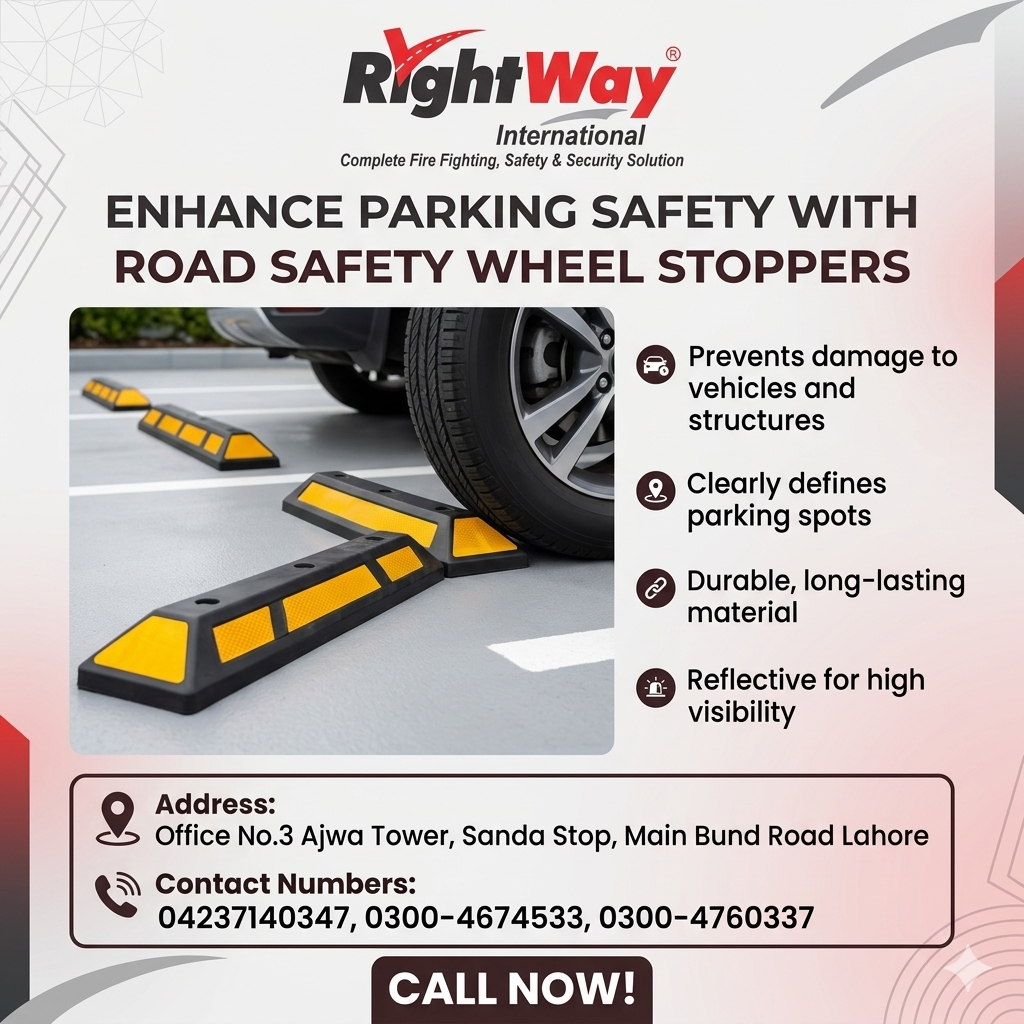
Road Safety Wheel Stoppers are highly visible parking control devices designed to improve vehicle positioning, enhance parking safety, regulate traffic movement, protect infrastructure, and increase public safety in parking facilities, transportation hubs, commercial properties, industrial sites, and roadway environments. These essential traffic safety devices help prevent vehicle overruns, reduce property damage, improve parking discipline, enhance pedestrian safety, and support safer transportation infrastructure in accordance with applicable road safety regulations, parking management standards, transportation engineering guidelines, and Occupational Safety and Health Administration (OSHA) safety requirements.
Road safety wheel stoppers are widely used in parking lots, commercial buildings, shopping centers, warehouses, industrial facilities, airports, schools, hospitals, residential communities, logistics centers, transportation terminals, government facilities, and smart city infrastructure projects to improve parking organization and vehicle control.
As vehicle ownership and urban traffic volumes continue to increase globally, wheel stoppers play a critical role in parking management systems, accident prevention programs, vehicle control strategies, infrastructure protection initiatives, pedestrian safety enhancement, smart mobility solutions, and sustainable transportation development. They support compliance with transportation authority requirements, parking facility regulations, roadway engineering standards, and public safety objectives.
What Are Road Safety Wheel Stoppers?
A Road Safety Wheel Stopper, also known as a parking block, wheel chock, parking curb, vehicle stop block, parking stopper, or wheel barrier, is a safety device installed on parking surfaces to limit vehicle movement and ensure proper parking alignment.
These devices provide a physical barrier that prevents vehicles from moving beyond designated parking spaces, helping protect pedestrians, buildings, equipment, landscaping, and other vehicles from accidental impacts.
Road safety wheel stoppers are commonly used for:
- Vehicle positioning
- Parking space management
- Parking lot safety
- Traffic control
- Infrastructure protection
- Pedestrian safety
- Vehicle overrun prevention
- Parking guidance
- Asset protection
- Traffic organization
- Parking discipline improvement
- Collision prevention
- Fleet management
- Loading dock safety
- Smart parking systems
Parking Wheel Stop Systems
Parking wheel stop systems are commonly used for:
- Parking lot organization
- Vehicle containment
- Parking space delineation
- Commercial property protection
- Residential parking management
- Industrial facility safety
- Warehouse vehicle control
- Fleet parking management
- Shopping mall parking safety
- Airport parking guidance
- Logistics center operations
- Transportation terminal safety
- Public infrastructure protection
- Smart parking projects
- Sustainable urban mobility solutions
Road Safety Equipment
Road safety equipment is commonly used for:
- Traffic regulation
- Accident prevention
- Vehicle guidance
- Parking management
- Pedestrian protection
- Highway safety programs
- Construction site safety
- Vehicle flow control
- Driver awareness enhancement
- Public infrastructure safety
- Transportation management
- Emergency response planning
- Parking visibility improvement
- Regulatory compliance
- Risk reduction initiatives
Key Components of Road Safety Wheel Stoppers
A typical road safety wheel stopper system includes:
- Durable stopper body
- Reflective strips
- High-visibility markings
- Mounting anchors
- Fixing bolts
- Steel reinforcement
- Rubber construction
- Concrete structure
- Plastic composite materials
- UV-resistant coating
- Impact-resistant design
- Anti-slip surface
- Reflective safety tape
- Embedded warning markers
- Drainage channels
- Corrosion-resistant hardware
- Weatherproof materials
- Surface mounting system
How Road Safety Wheel Stoppers Work
Wheel stoppers improve parking safety by physically restricting vehicle movement within designated parking areas.
Step 1: Vehicle Entry
A vehicle enters a designated parking space.
Step 2: Controlled Movement
The driver slowly advances the vehicle toward the wheel stopper.
Step 3: Wheel Contact
Vehicle tires make controlled contact with the wheel stopper.
Step 4: Positioning Guidance
The stopper prevents further movement and ensures proper parking alignment.
Step 5: Improved Safety
Correct vehicle positioning reduces collision risks and protects surrounding infrastructure.
Types of Road Safety Wheel Stoppers
1. Rubber Wheel Stoppers
Manufactured from recycled or heavy-duty rubber materials for durability and impact absorption.
2. Concrete Wheel Stoppers
Heavy-duty parking barriers designed for permanent installations.
3. Plastic Wheel Stoppers
Lightweight and cost-effective solutions for parking management.
4. Steel Wheel Stoppers
Industrial-grade vehicle restraint systems for high-impact environments.
5. Reflective Wheel Stoppers
Equipped with reflective markings for enhanced visibility.
6. Recycled Rubber Wheel Stoppers
Eco-friendly solutions manufactured from recycled tire materials.
7. Heavy-Duty Wheel Stoppers
Designed for truck terminals, warehouses, and industrial facilities.
8. Commercial Parking Wheel Stoppers
Suitable for shopping centers, office complexes, and public parking areas.
9. Residential Wheel Stoppers
Used in apartment complexes and private parking facilities.
10. Smart Parking Wheel Stoppers
Integrated with sensors and smart parking management technologies.
Common Applications of Road Safety Wheel Stoppers
Wheel stoppers are widely used in:
- Parking lots
- Shopping malls
- Commercial buildings
- Residential communities
- Warehouses
- Distribution centers
- Logistics facilities
- Airports
- Hospitals
- Schools
- Universities
- Government facilities
- Public transportation terminals
- Industrial plants
- Smart city developments
Parking Safety Systems
Parking safety systems are commonly used for:
- Vehicle positioning
- Parking control
- Traffic management
- Property protection
- Pedestrian safety
- Accident prevention
- Parking facility operations
- Commercial site management
- Fleet management
- Urban mobility programs
- Infrastructure protection
- Safety compliance
- Smart parking integration
- Risk management
- Transportation efficiency
Road Safety Studs
Road safety studs are commonly used for:
- Lane guidance
- Roadway delineation
- Traffic channelization
- Highway safety
- Night-time visibility enhancement
- Curve warning systems
- Accident prevention
- Road edge marking
- Intersection guidance
- Tunnel safety
- Bridge safety
- Construction zone traffic control
- Smart transportation systems
- Driver awareness improvement
- Road hazard identification
Importance of Road Safety Wheel Stoppers in Transportation Systems
Road safety wheel stoppers are essential components of modern parking and transportation infrastructure.
Key Benefits
- Improves parking accuracy
- Prevents vehicle overruns
- Enhances pedestrian safety
- Protects buildings and assets
- Reduces collision risks
- Supports traffic organization
- Improves parking discipline
- Enhances visibility
- Supports smart parking initiatives
- Increases operational efficiency
Technical Specifications
| Specification | Details |
|---|---|
| Equipment Type | Road Safety Wheel Stopper |
| Function | Vehicle Positioning and Parking Safety |
| Material | Rubber, Concrete, Plastic, Steel |
| Mounting Type | Surface Mounted |
| Visibility | High |
| Reflective Elements | Available |
| Impact Resistance | High |
| Weather Resistance | Excellent |
| Maintenance Requirement | Low |
| Compliance Standards | OSHA, MUTCD, ASTM, DOT Standards, Local Parking Safety Regulations |
Key Features and Advantages of Road Safety Wheel Stoppers
High Visibility
Reflective markings improve visibility during low-light conditions.
Improved Safety
Reduce parking-related accidents and property damage.
Durable Construction
Designed to withstand repeated vehicle impacts and harsh environmental conditions.
Easy Installation
Can be quickly installed on asphalt or concrete surfaces.
Cost Effective
Provide long-term protection with minimal maintenance costs.
Long Service Life
Manufactured using durable materials for extended operational performance.
Environmental Benefits
Recycled rubber models help reduce waste and support sustainability initiatives.
Regulatory Compliance
Support compliance with parking safety standards and transportation regulations.
How to Select the Right Road Safety Wheel Stopper
1. Assess Traffic Conditions
Evaluate vehicle size, parking volume, and operational requirements.
2. Determine Installation Environment
Analyze indoor, outdoor, commercial, industrial, or public facility conditions.
3. Select Appropriate Material
Choose rubber, concrete, steel, or plastic based on durability requirements.
4. Consider Visibility Requirements
Select reflective models for enhanced visibility.
5. Verify Compliance Requirements
Ensure compliance with local safety regulations and parking management standards.
Best Practices for Using Road Safety Wheel Stoppers
- Conduct regular inspections
- Replace damaged units promptly
- Maintain reflective markings
- Verify secure mounting
- Follow manufacturer recommendations
- Implement preventive maintenance programs
- Monitor parking performance
- Ensure proper positioning
- Maintain compliance documentation
- Integrate with parking management systems
Industries That Use Road Safety Wheel Stoppers
- Transportation authorities
- Municipal governments
- Parking management companies
- Commercial property developers
- Shopping centers
- Airports
- Healthcare facilities
- Educational institutions
- Industrial facilities
- Warehousing operations
- Logistics centers
- Government agencies
- Security organizations
- Residential property managers
- Smart city developers
Importance of Transportation and Parking Safety Compliance
Road safety wheel stoppers help organizations achieve compliance by ensuring:
- Improved vehicle positioning
- Enhanced parking safety
- Reduced property damage
- Better traffic organization
- Increased pedestrian protection
- Improved facility management
- Enhanced infrastructure protection
- Compliance with safety regulations
Difference Between Rubber and Concrete Wheel Stoppers
| Feature | Rubber Wheel Stoppers | Concrete Wheel Stoppers |
| Weight | Moderate | Heavy |
| Installation | Easy | Moderate |
| Durability | High | Very High |
| Impact Absorption | Excellent | Moderate |
| Visibility | High | Moderate |
| Maintenance | Low | Low |
| Cost | Moderate | Moderate |
| Portability | Good | Limited |
Frequently Asked Questions (FAQs)
What are Road Safety Wheel Stoppers used for?
Road safety wheel stoppers are used to control vehicle positioning, improve parking safety, and protect infrastructure.
Where are Wheel Stoppers commonly installed?
They are commonly installed in parking lots, warehouses, airports, hospitals, schools, shopping centers, and industrial facilities.
What materials are used in Wheel Stoppers?
Common materials include rubber, concrete, steel, plastic, and composite materials.
Do Reflective Wheel Stoppers improve visibility?
Yes. Reflective wheel stoppers improve visibility during darkness and adverse weather conditions.
When should Wheel Stoppers be replaced?
They should be replaced when physical damage, excessive wear, reduced visibility, or safety concerns are identified.
Road Safety Wheel Stoppers are essential parking safety devices that improve vehicle positioning, enhance pedestrian protection, prevent collisions, reduce property damage, and support efficient traffic management. Their durable construction, high visibility, impact resistance, and compliance with transportation and safety standards make them indispensable for parking facilities, commercial properties, industrial sites, airports, logistics centers, smart cities, and public infrastructure projects. By improving parking discipline, protecting infrastructure, and enhancing public safety, road safety wheel stoppers contribute significantly to safer, smarter, and more efficient transportation environments worldwide.