




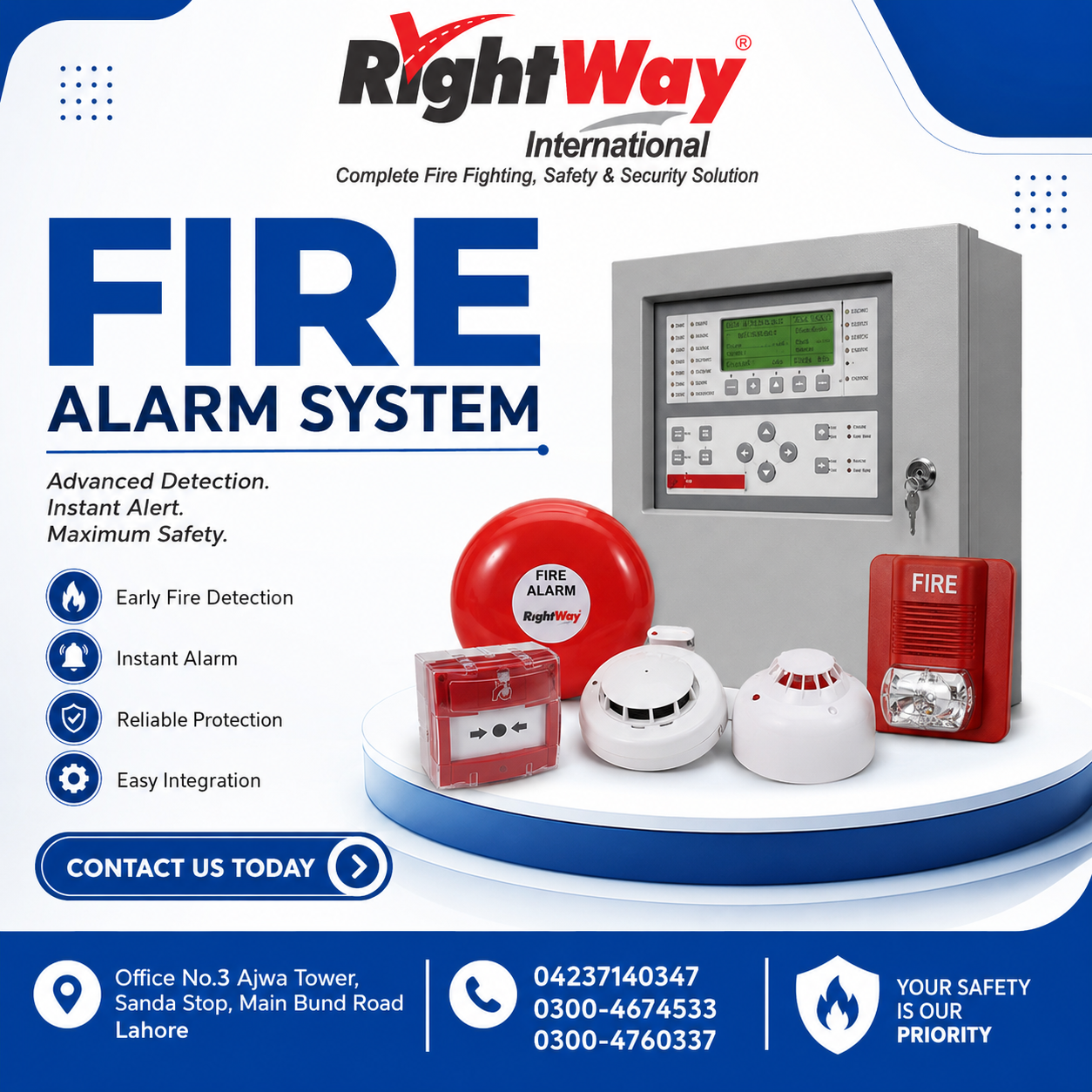
Fire spreads fast, but smoke and heat spread faster — which is exactly why a fire alarm system in Pakistan matters as much as the extinguishers and hoses sitting nearby. A working fire alarm system in Pakistan gives people the one thing they need most in an emergency: early warning, while there’s still time to evacuate and respond. This guide breaks down how a fire alarm system works, what a proper fire alarm in Pakistan should include, how to choose between conventional and addressable setups, and what actually drives the cost.
Fire Alarm System in Pakistan: Quick Summary
A fire alarm system detects smoke, heat, or flame early and alerts everyone in the building before the fire has a chance to spread. The right setup depends on building size and risk: small offices and homes can rely on a conventional system with a handful of zones, while factories, hospitals, and high-rises need an addressable system that pinpoints the exact device that triggered. Either way, the system needs certified detectors, a compliant control panel, audible and visual alarms, and a battery backup — plus annual testing to stay reliable.
What Is a Fire Alarm System and Why Pakistan’s Buildings Need One
A fire alarm system is a network of detectors, a central control panel, and notification devices (sounders, strobe lights) that work together to catch a fire in its earliest stage. In Pakistan’s crowded commercial plazas, garment factories, and multi-story residential blocks, that early warning is often the difference between an orderly evacuation and a tragedy — smoke inhalation, not flames, is the leading cause of fire deaths, and by the time smoke is visible or flames are large, an alarm should already have sounded.
Beyond life safety, a fire alarm in Pakistan is increasingly a compliance requirement. Labor departments, civil defence authorities, and building control bodies in major cities require certified fire alarm systems in factories, hospitals, schools, hotels, and high-rise buildings before occupancy or renewal of licenses.
Key Components of a Fire Alarm System
Every fire alarm system in Pakistan, regardless of size, is built from the same core parts:
- Smoke detectors: Sense smoke particles in the air — ionization types react fast to flaming fires, photoelectric types react faster to smoldering fires.
- Heat detectors: Trigger on rapid temperature rise, ideal for kitchens and garages where smoke detectors would false-alarm.
- Flame detectors: Sense infrared or ultraviolet light from open flame, used in high-risk industrial zones.
- Gas leak detectors: Catch dangerous gas buildup before it becomes a fire or explosion risk.
- Fire alarm control panel: The brain of the system — receives signals from every detector and triggers the alarm response.
- Manual call points: Let occupants manually trigger the alarm the moment they spot a fire, before automatic detectors react.
- Sounders and strobe flashers: Alert everyone audibly and visually, critical in noisy factory floors or for hearing-impaired occupants.
- Battery backup: Keeps the system operational during a power outage — a real concern given Pakistan’s frequent load-shedding.
Conventional vs Addressable Fire Alarm Systems: Which One Do You Need?
This is the single biggest decision when planning a fire alarm system in Pakistan:
| Feature | Conventional System | Addressable System |
|---|---|---|
| How it locates a fire | By zone (a group of detectors on one circuit) | By exact device — pinpoints the specific detector |
| Best for | Small buildings, single-floor offices, retail shops | Large facilities, hospitals, high-rises, factories with multiple zones |
| Wiring & installation | Simpler, lower upfront cost | More complex wiring, higher upfront cost |
| Response speed | Slower — staff must search the whole zone | Faster — exact location shown on panel display |
| Scalability | Limited — adding zones is costly later | Easy to expand with additional addressable devices |
As a rule of thumb: if your building has fewer than a few dozen rooms on one or two floors, a conventional fire alarm system in Pakistan is usually sufficient and more cost-effective. Once you’re managing a multi-floor building, a hospital, or an industrial facility with dozens of zones, an addressable system pays for itself in faster response and easier troubleshooting.
Where Fire Alarm Systems Are Required in Pakistan
Certified fire alarm systems are typically required — and in many cases legally mandated — in:
- Factories and industrial units (labor and industrial safety regulations)
- Hospitals and healthcare facilities
- Schools, colleges, and universities
- Hotels and guesthouses
- High-rise residential and commercial buildings
- Shopping malls and commercial plazas
- Warehouses and storage facilities
Requirements vary by city and building type, so it’s worth confirming the exact standard with your local civil defence or building control authority.
How to Choose the Right Fire Alarm System for Your Building
- Homes and small offices: A basic conventional system with smoke detectors in key rooms and a compact control panel covers most needs.
- Commercial buildings and plazas: A zoned conventional or entry-level addressable system, depending on floor count, with manual call points near exits.
- Factories and warehouses: An addressable system combining smoke, heat, and flame detectors matched to specific hazards in each zone (e.g., heat detectors near furnaces, flame detectors near flammable storage).
- Hospitals and high-rises: A fully addressable system integrated with the building’s evacuation and sprinkler systems, with redundant power backup.
Fire Alarm System Price in Pakistan: What Affects the Cost
Like most fire safety equipment, a fire alarm system in Pakistan doesn’t have one fixed price — it scales with the building. The main cost drivers are:
- Conventional vs addressable: Addressable systems cost more per device due to the electronics, but simplify wiring in large buildings.
- Number of zones and devices: More detectors, call points, and sounders directly increase material and installation cost.
- Building complexity: Multi-floor buildings need more cabling, conduit, and labor than a single open floor.
- Integration requirements: Linking the fire alarm to sprinkler systems, smoke control, or a building management system adds engineering cost.
- Brand and certification: Internationally certified panels and detectors (UL, EN54) cost more than uncertified alternatives but are far more dependable.
Because these factors vary so much project to project, the most accurate way to budget is a site survey and custom quote rather than relying on a generic per-unit price.
Installation & Compliance Standards
Professional fire alarm installation in Pakistan generally follows NFPA 72, the widely referenced international standard for fire alarm system design, installation, and testing. Key installation principles include:
- Smoke detectors spaced according to ceiling height and room layout — not just “one per room” guesswork
- Manual call points installed at every exit and along escape routes
- Sounders positioned so the alarm is audible throughout the building, including enclosed rooms
- The control panel located where facility staff or security can monitor and respond quickly
- Battery backup sized to keep the system running for a minimum period during a power outage
Fire Alarm System Maintenance & Testing
An installed system is only as good as its last inspection. A reasonable schedule:
- Weekly: Test one manual call point on rotation to confirm the panel responds correctly.
- Monthly: Visual check of detectors, panel indicators, and battery status.
- Annually: Full system inspection and testing by a certified technician, including every detector and sounder.
- Battery replacement: Per manufacturer guidance, typically every few years depending on battery type and usage.
Right Way International provides fire alarm inspection and maintenance services across Pakistan to keep systems compliant and dependable year-round.
Right Way International: Certified Fire Alarm Systems in Pakistan
Right Way International designs, supplies, and installs certified fire alarm systems across Karachi, Lahore, Islamabad, and other major cities in Pakistan — including smoke detectors, heat detectors, flame detectors, gas leak detectors, control panels, and manual call points. We also handle fire safety training and full fire protection system design, so detection, suppression, and evacuation planning work together rather than as separate, disconnected purchases.
Frequently Asked Questions
What is the difference between a fire alarm and a fire detection system?
They’re usually the same thing described two ways — “fire detection” refers to the sensing devices (smoke, heat, flame detectors), while “fire alarm system” refers to the complete setup including the control panel and notification devices that respond to what those sensors detect.
Is a fire alarm system mandatory in Pakistan?
Most commercial buildings, factories, hospitals, schools, and high-rises are required by municipal, labor, and civil defence regulations to have a certified fire alarm system installed. Requirements vary by city and building type, so check with your local authority.
Conventional or addressable — which is better for a small business?
For a single-floor shop or small office, a conventional system is usually sufficient and more affordable. Addressable systems make more sense once you’re managing multiple floors or zones where knowing the exact device location saves critical response time.
How often should a fire alarm system be tested?
Manual call points should be tested weekly on rotation, with a full professional inspection at least once a year — more frequently in high-risk industrial environments.
Planning a fire alarm system for your building in Pakistan? Contact Right Way International for a site survey, custom design, and certified installation.