




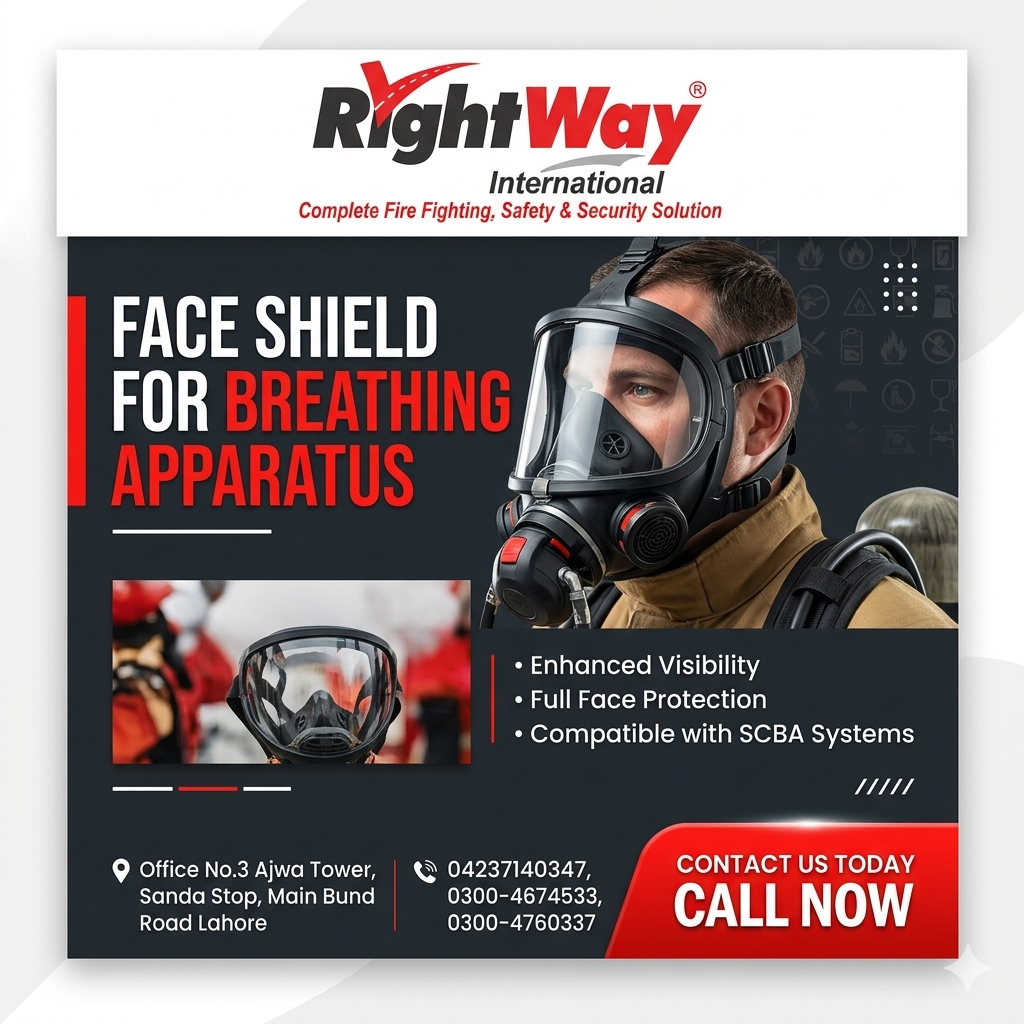
Face Shield With Breathing Apparatus is an advanced respiratory and facial protection system designed to provide complete protection against hazardous airborne contaminants, toxic gases, smoke, dust, fumes, chemicals, biological agents, and oxygen-deficient environments. It combines a full-face protective shield with an integrated breathing apparatus to ensure both respiratory safety and facial protection in dangerous working conditions.
Face shields with breathing apparatus systems are widely used in firefighting operations, chemical processing plants, oil and gas facilities, pharmaceutical manufacturing, mining operations, confined space entry, hazardous material response teams, military applications, emergency rescue services, marine industries, and industrial safety environments where worker protection is critical.
Because these systems are used in life-support and emergency situations, they are designed to provide a continuous supply of breathable air while simultaneously protecting the eyes, face, and respiratory system from exposure to harmful substances. They help organizations comply with international safety standards such as OSHA, National Fire Protection Association , NIOSH, EN, ANSI, and ISO regulations.
What Is a Face Shield With Breathing Apparatus?
A Face Shield With Breathing Apparatus is a complete respiratory protection system that integrates a transparent protective face shield with a breathing air delivery mechanism. The equipment supplies clean breathing air to the user while shielding the face from physical, chemical, thermal, and biological hazards.
It is commonly used for:
- Self-Contained Breathing Apparatus (SCBA) systems
- Supplied-Air Respirator (SAR) systems
- Firefighter breathing apparatus
- Chemical handling operations
- Hazardous material response activities
- Emergency escape breathing devices
- Industrial respiratory protection equipment
- Pharmaceutical manufacturing facilities
- Offshore oil and gas operations
- Mining and tunneling projects
- Marine and shipboard safety systems
- Nuclear power facilities
- Confined space entry operations
- Military respiratory protection systems
- Emergency rescue applications
Breathing Apparatus Pressure Reducer
Breathing Apparatus Pressure Reducer is a precision-engineered pressure control device that decreases the extremely high pressure stored in breathing air cylinders to a lower, regulated pressure suitable for safe respiratory use.
It is commonly used for:
- Self-Contained Breathing Apparatus (SCBA) systems
- Airline breathing apparatus systems
- Emergency escape breathing devices (EEBD)
- Industrial respiratory protection equipment
- Firefighter breathing apparatus
- Offshore breathing air systems
- Mining respiratory equipment
- Chemical plant breathing apparatus
- Marine and shipboard safety systems
- Emergency rescue breathing systems
- Military respiratory protection equipment
- Confined space entry breathing apparatus
- Hazardous material response equipment
- Industrial air supply systems
- Compressed breathing air distribution networks
Key Components of a Face Shield With Breathing Apparatus
A typical face shield with breathing apparatus includes:
- Full-face transparent shield
- Impact-resistant visor
- Breathing air regulator
- Demand valve assembly
- Air supply hose
- Breathing air cylinder
- Pressure reducer
- Exhalation valve
- Inhalation valve
- Face seal gasket
- Head harness assembly
- Adjustable straps
- Anti-fog visor coating
- Communication interface system
- Airflow distribution system
- Protective housing
- Quick-connect fittings
- Safety locking mechanism
- Air pressure monitoring system
- Emergency bypass valve
How Face Shield With Breathing Apparatus Works
The system is engineered to provide clean breathable air while protecting the wearer’s face from external hazards.
Step 1: Air Supply Activation
Compressed breathing air is supplied from a cylinder or external breathing air source.
Step 2: Pressure Regulation
The pressure reducer lowers high-pressure air to a safe working pressure.
Step 3: Air Delivery
The breathing regulator delivers air through the demand valve according to the user’s breathing requirements.
Step 4: Face Protection
The transparent shield protects the face and eyes from impacts, chemicals, sparks, heat, smoke, and airborne particles.
Step 5: Continuous Respiratory Protection
The apparatus continuously provides breathable air while maintaining positive pressure inside the facepiece to prevent contamination.
Types of Face Shield With Breathing Apparatus
1. SCBA Face Shield Breathing Apparatus
Used by firefighters and emergency responders carrying a self-contained air cylinder.
2. Airline Face Shield Respirator
Connected to an external compressed air source for long-duration work.
3. Positive Pressure Face Shield Apparatus
Maintains positive pressure inside the facepiece to prevent contaminant entry.
4. Chemical Protection Face Shield Breathing System
Designed for handling hazardous chemicals and toxic substances.
5. Emergency Escape Face Shield Apparatus
Compact respiratory protection equipment used during emergency evacuations.
6. Powered Air Purifying Face Shield Respirator (PAPR)
Uses a powered blower system to deliver filtered air to the wearer.
Common Applications of Face Shield With Breathing Apparatus
Face shield breathing apparatus systems are widely used in:
- Firefighting operations
- Oil and gas refineries
- Chemical manufacturing plants
- Pharmaceutical industries
- Mining operations
- Marine and offshore facilities
- Emergency rescue services
- Hazardous material response teams
- Nuclear power stations
- Aviation maintenance facilities
- Metal processing industries
- Welding operations
- Construction projects
- Utility maintenance operations
- Confined space entry work
Importance of Face Shield With Breathing Apparatus in Safety Systems
These systems play a critical role in worker protection and respiratory safety.
Key Benefits:
- Provides complete face and respiratory protection
- Supplies clean breathable air
- Protects against toxic gases and vapors
- Prevents inhalation of hazardous particles
- Enhances visibility in dangerous environments
- Improves worker safety and comfort
- Supports emergency response operations
- Protects against chemical splashes
- Reduces risk of respiratory injuries
- Ensures regulatory compliance
Technical Specifications
| Specification | Details |
|---|---|
| Equipment Type | Face Shield With Breathing Apparatus |
| Function | Respiratory and Facial Protection |
| Air Supply | Compressed Breathing Air |
| Protection Type | Full Face and Respiratory Protection |
| Face Shield Material | Polycarbonate or High-Impact Polymer |
| Airflow System | Demand Valve or Continuous Flow |
| Operating Pressure | As Per SCBA/SAR System Design |
| Standards | OSHA, NFPA, NIOSH, EN, ANSI, ISO |
| Applications | Industrial, Firefighting, Chemical, Offshore |
| Maintenance Requirement | Routine Inspection and Testing |
Key Features and Advantages of Face Shield With Breathing Apparatus
Complete Facial Protection
Protects eyes, nose, mouth, and skin from workplace hazards.
Reliable Air Supply
Provides a continuous source of breathable air.
High Visibility Shield
Offers a wide field of vision for improved situational awareness.
Anti-Fog Technology
Reduces visor fogging during operation.
Chemical Resistance
Protects against hazardous chemical splashes and vapors.
Durable Construction
Manufactured from impact-resistant and corrosion-resistant materials.
Comfortable Design
Ergonomically designed for extended wear.
Regulatory Compliance
Meets international occupational safety standards.
How to Select the Right Face Shield With Breathing Apparatus
1. Identify Workplace Hazards
Determine exposure risks such as smoke, chemicals, dust, gases, or oxygen deficiency.
2. Select Appropriate Air Supply System
Choose between SCBA, supplied-air respirator, or PAPR systems.
3. Verify Protection Standards
Ensure compliance with OSHA, NIOSH, NFPA, EN, ANSI, and ISO requirements.
4. Evaluate Comfort and Fit
Choose equipment that provides a secure seal and comfortable wear.
5. Assess Airflow Requirements
Verify sufficient airflow capacity for the intended application.
Best Practices for Using Face Shield With Breathing Apparatus
- Inspect equipment before each use
- Check air cylinder pressure regularly
- Verify proper face seal fit
- Test breathing air supply systems
- Clean face shield after use
- Replace damaged components immediately
- Follow manufacturer maintenance schedules
- Conduct periodic performance testing
- Train personnel on proper operation
- Maintain inspection records
Industries That Use Face Shield With Breathing Apparatus
- Fire and rescue services
- Oil and gas industry
- Chemical processing facilities
- Pharmaceutical manufacturing plants
- Mining and tunneling companies
- Marine and shipbuilding industries
- Military and defense organizations
- Nuclear facilities
- Aviation maintenance operations
- Industrial manufacturing plants
- Construction companies
- Utility service providers
- Hazardous waste management companies
- Emergency response agencies
- Environmental remediation contractors
Importance of OSHA and Safety Compliance
Face shield breathing apparatus systems help organizations comply with occupational safety regulations by ensuring:
- Effective respiratory protection
- Complete facial hazard protection
- Reduced workplace injury risks
- Safe emergency response operations
- Proper hazardous material handling
- Enhanced worker health and safety
- Reliable respiratory equipment performance
- Compliance with respiratory protection programs
Difference Between Face Shield With Breathing Apparatus and Standard Face Shield
| Feature | Face Shield With Breathing Apparatus | Standard Face Shield |
| Respiratory Protection | Yes | No |
| Air Supply System | Integrated | Not Available |
| Hazardous Environment Use | Yes | Limited |
| Chemical Protection | High | Moderate |
| Toxic Gas Protection | Yes | No |
| Emergency Response Use | Yes | Limited |
| Regulatory Requirements | Extensive | Basic |
| Worker Safety Level | Maximum | Moderate |
Frequently Asked Questions (FAQs)
What is a Face Shield With Breathing Apparatus used for?
It provides combined respiratory and facial protection in hazardous work environments.
How does a face shield breathing apparatus work?
It delivers clean breathing air while protecting the face from physical, chemical, and airborne hazards.
Where is a face shield breathing apparatus commonly used?
It is used in firefighting, chemical processing, oil and gas operations, mining, pharmaceutical manufacturing, and emergency rescue services.
What standards apply to face shield breathing apparatus systems?
Common standards include OSHA, NFPA, NIOSH, EN, ANSI, and ISO requirements.
Why is respiratory protection important?
Respiratory protection prevents inhalation of harmful contaminants and supports worker safety in hazardous environments.
Conclusion
Face Shield With Breathing Apparatus systems are essential safety solutions that provide comprehensive facial and respiratory protection in hazardous environments. By combining a durable face shield with a reliable breathing air supply system, these devices help protect workers from toxic gases, smoke, chemicals, airborne particles, and other workplace hazards.
Their advanced design, dependable performance, regulatory compliance, and life-saving capabilities make them indispensable in firefighting, industrial safety, chemical processing, mining, offshore operations, pharmaceutical manufacturing, emergency response, and numerous other high-risk industries. Proper selection, maintenance, and use of face shield breathing apparatus equipment significantly enhance worker safety, operational efficiency, and emergency preparedness.