




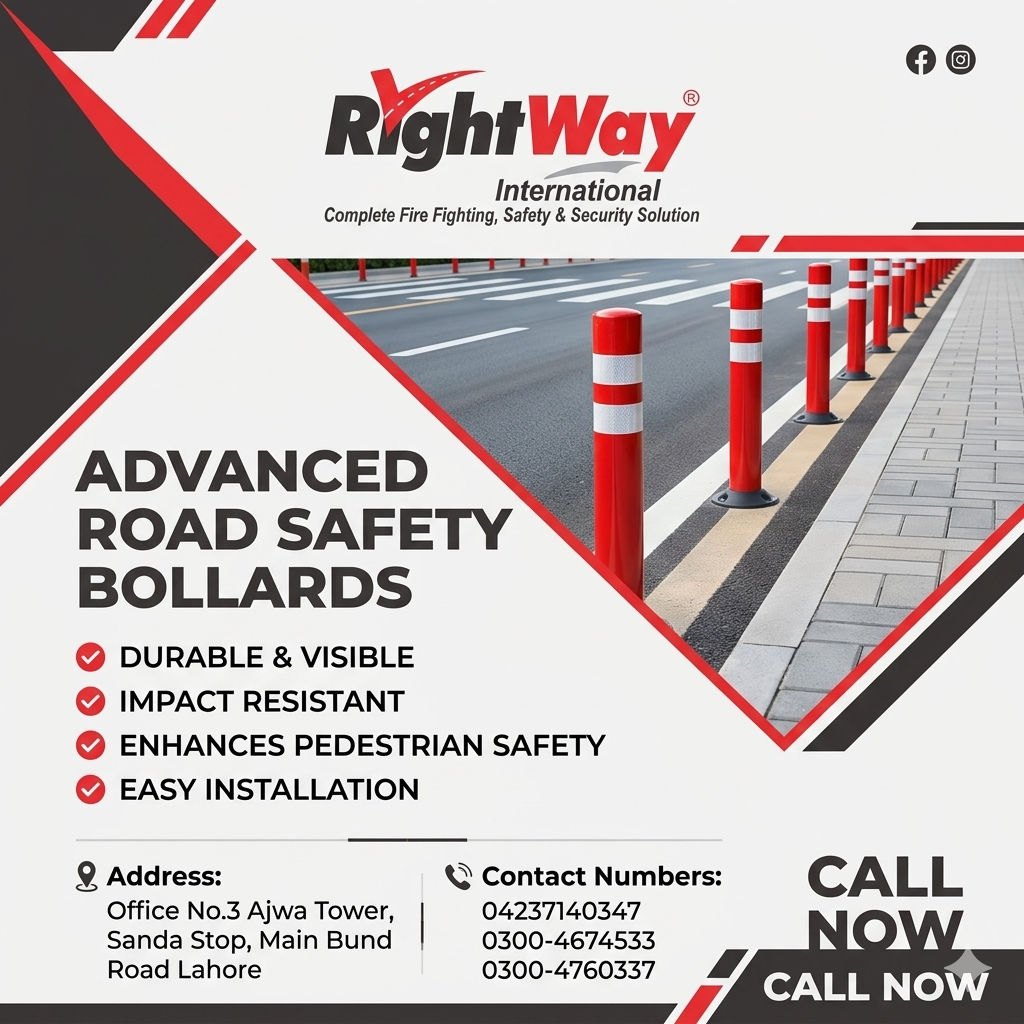
Road Safety Bollards are highly visible traffic control and safety devices designed to improve roadway safety, regulate vehicle movement, protect pedestrians, enhance traffic management, prevent unauthorized access, and support transportation infrastructure across highways, urban roads, industrial facilities, commercial properties, parking areas, public spaces, and smart city developments. These essential road safety products help reduce vehicle collisions, improve traffic flow, increase pedestrian protection, safeguard critical infrastructure, and support compliance with transportation regulations, traffic engineering standards, Occupational Safety and Health Administration (OSHA) requirements, Department of Transportation (DOT) guidelines, and roadway safety management systems.
Road safety bollards are widely used on roads, highways, intersections, parking lots, warehouses, airports, logistics centers, hospitals, schools, shopping malls, government facilities, industrial plants, pedestrian zones, residential communities, construction sites, and public infrastructure projects to improve safety and control traffic movement.
As urbanization, traffic density, and transportation demands continue to increase globally, road safety bollards play a critical role in accident prevention programs, traffic calming initiatives, vehicle access control systems, pedestrian safety strategies, smart transportation networks, and sustainable infrastructure development. They support compliance with road safety regulations, workplace safety requirements, public safety standards, and transportation engineering best practices.
What Are Road Safety Bollards?
A Road Safety Bollard is a vertical post or barrier installed to guide traffic, restrict vehicle access, separate pedestrians from vehicles, improve roadway visibility, and protect infrastructure. Bollards are manufactured from durable materials such as steel, plastic, polyurethane, rubber, concrete, aluminum, and composite materials to withstand environmental conditions and vehicle impacts.
Road safety bollards are commonly used for:
- Traffic control
- Vehicle guidance
- Pedestrian protection
- Access restriction
- Parking management
- Roadway delineation
- Traffic calming
- Construction zone safety
- Infrastructure protection
- Security enhancement
- Accident prevention
- Lane separation
- Hazard marking
- Work zone management
- Smart transportation systems
Bollard Safety Systems
Bollard safety systems are commonly used for:
- Traffic management
- Vehicle access control
- Pedestrian zone protection
- Parking facility safety
- Highway safety enhancement
- Construction site protection
- Public infrastructure security
- Industrial traffic control
- Urban mobility management
- School zone safety
- Airport safety programs
- Logistics facility protection
- Commercial property security
- Risk reduction programs
- Smart city infrastructure
Road Safety Equipment
Road safety equipment is commonly used for:
- Traffic regulation
- Vehicle guidance
- Driver awareness enhancement
- Pedestrian safety
- Roadway protection
- Parking control
- Construction safety
- Traffic calming measures
- Infrastructure security
- Public safety management
- Emergency route protection
- Workplace safety compliance
- Transportation planning
- Hazard identification
- Smart mobility initiatives
Key Components of Road Safety Bollards
A typical road safety bollard system includes:
- Bollard post
- Reflective bands
- High-visibility markings
- Mounting base
- Anchor bolts
- Reinforced core
- Impact-resistant body
- Flexible polymer structure
- Steel support frame
- UV-resistant coating
- Corrosion-resistant finish
- Safety reflectors
- Protective cap
- Ground fixing hardware
- Surface mounting accessories
- Embedded foundation system
- Warning labels
- Visibility enhancement elements
Traffic Convex Mirrors
Traffic convex mirrors are commonly used for:
- Blind spot elimination
- Intersection visibility improvement
- Traffic safety enhancement
- Vehicle collision prevention
- Parking lot safety
- Warehouse traffic management
- Pedestrian safety
- Driveway monitoring
- Industrial facility safety
- Vehicle maneuvering assistance
- Security surveillance support
- Traffic flow management
- Loading dock safety
- Accident prevention
- Smart transportation systems
How Road Safety Bollards Work
Road safety bollards improve safety by guiding traffic, restricting vehicle movement, and enhancing visibility.
Step 1: Bollard Installation
Bollards are installed along roads, sidewalks, parking facilities, intersections, or restricted access zones.
Step 2: Visibility Enhancement
Reflective surfaces and high-visibility colors improve driver awareness during both day and night.
Step 3: Traffic Guidance
Bollards define traffic lanes, pedestrian zones, parking areas, and vehicle pathways.
Step 4: Access Control
The bollards restrict unauthorized vehicle entry into protected areas.
Step 5: Improved Safety
Enhanced guidance and separation reduce collision risks and improve traffic flow.
Types of Road Safety Bollards
1. Flexible Traffic Bollards
Designed to bend upon impact and return to their original position.
2. Fixed Bollards
Permanent installations used for access control and infrastructure protection.
3. Removable Bollards
Can be removed when temporary access is required.
4. Retractable Bollards
Can be lowered or raised for controlled vehicle access.
5. Reflective Bollards
Feature reflective bands for maximum visibility during low-light conditions.
6. Steel Safety Bollards
Heavy-duty bollards used for high-security and industrial applications.
7. Plastic Traffic Bollards
Lightweight and cost-effective traffic guidance solutions.
8. Pedestrian Safety Bollards
Installed to separate pedestrian walkways from vehicle traffic.
9. Parking Bollards
Used to organize parking facilities and restrict unauthorized parking.
10. Security Bollards
Designed to protect buildings and critical infrastructure from vehicle intrusion.
Common Applications of Road Safety Bollards
Road safety bollards are widely used in:
- Highways
- Urban roads
- Road intersections
- Parking lots
- Airports
- Warehouses
- Manufacturing facilities
- Schools
- Hospitals
- Shopping centers
- Residential communities
- Logistics centers
- Construction sites
- Government buildings
- Smart city projects
Traffic Control Systems
Traffic control systems are commonly used for:
- Vehicle guidance
- Lane management
- Traffic separation
- Access control
- Parking regulation
- Pedestrian protection
- Accident prevention
- Infrastructure protection
- Construction zone safety
- Transportation management
- Security enhancement
- Public safety programs
- Traffic engineering projects
- Urban mobility planning
- Smart transportation networks
Importance of Road Safety Bollards in Transportation Systems
Road safety bollards are fundamental components of modern transportation infrastructure.
Key Benefits
- Improve roadway visibility
- Enhance traffic control
- Protect pedestrians
- Reduce accident risks
- Prevent unauthorized access
- Support traffic calming
- Improve parking safety
- Protect critical infrastructure
- Enhance workplace safety
- Support smart city development
Technical Specifications
| Specification | Details |
|---|---|
| Equipment Type | Road Safety Bollard |
| Function | Traffic Control and Pedestrian Protection |
| Material | Steel, Plastic, Polyurethane, Rubber, Aluminum |
| Mounting Type | Surface Mounted, Embedded, Removable |
| Visibility | High Visibility Reflective Design |
| Weather Resistance | Excellent |
| Impact Resistance | High |
| UV Protection | Available |
| Maintenance Requirement | Low |
| Compliance Standards | OSHA, MUTCD, ASTM, DOT Standards, Local Road Safety Regulations |
Key Features and Advantages of Road Safety Bollards
High Visibility
Bright colors and reflective bands improve visibility in all weather conditions.
Enhanced Safety
Reduce vehicle accidents and improve pedestrian protection.
Durable Construction
Manufactured using weather-resistant and impact-resistant materials.
Easy Installation
Suitable for surface mounting, embedded installation, and temporary deployment.
Cost Effective
Provide an affordable solution for traffic control and infrastructure protection.
Long Service Life
Designed for long-term outdoor performance.
Low Maintenance
Require minimal upkeep and periodic inspections.
Regulatory Compliance
Support compliance with transportation and workplace safety requirements.
How to Select the Right Road Safety Bollard
1. Assess Traffic Conditions
Evaluate traffic volume, vehicle speed, and roadway environment.
2. Determine Installation Location
Identify whether the bollards will be used indoors, outdoors, or in public spaces.
3. Select Appropriate Material
Choose steel, polyurethane, plastic, rubber, or aluminum based on durability needs.
4. Consider Visibility Requirements
Select reflective and high-visibility designs for enhanced safety.
5. Verify Compliance Standards
Ensure compliance with local transportation and safety regulations.
Best Practices for Using Road Safety Bollards
- Conduct routine inspections
- Clean reflective surfaces regularly
- Verify mounting stability
- Replace damaged bollards promptly
- Maintain visibility markings
- Monitor traffic performance
- Follow manufacturer recommendations
- Implement preventive maintenance programs
- Ensure regulatory compliance
- Integrate with broader traffic management systems
Industries That Use Road Safety Bollards
- Transportation departments
- Highway authorities
- Municipal governments
- Parking management companies
- Commercial property developers
- Warehousing operations
- Manufacturing facilities
- Airports
- Hospitals
- Educational institutions
- Logistics companies
- Government agencies
- Security organizations
- Industrial facilities
- Smart city developers
Importance of Transportation and Safety Compliance
Road safety bollards help organizations achieve compliance by ensuring:
- Improved traffic control
- Enhanced driver awareness
- Increased pedestrian safety
- Reduced collision risks
- Better access management
- Improved infrastructure protection
- Enhanced workplace safety
- Compliance with transportation regulations
Difference Between Flexible and Fixed Road Safety Bollards
| Feature | Flexible Bollards | Fixed Bollards |
| Impact Recovery | Excellent | Limited |
| Durability | High | Very High |
| Installation | Easy | Permanent |
| Traffic Guidance | Excellent | Good |
| Security Protection | Moderate | Excellent |
| Maintenance | Low | Low |
| Cost | Lower | Higher |
| Service Life | Long | Very Long |
Frequently Asked Questions (FAQs)
What are Road Safety Bollards used for?
Road safety bollards are used for traffic control, pedestrian protection, vehicle guidance, and access restriction.
Where are Road Safety Bollards commonly installed?
They are commonly installed on roads, parking lots, sidewalks, airports, warehouses, schools, hospitals, and public facilities.
What materials are used in Road Safety Bollards?
Common materials include steel, plastic, polyurethane, rubber, aluminum, and composite materials.
Do Road Safety Bollards improve road safety?
Yes. They improve traffic organization, increase visibility, protect pedestrians, and reduce collision risks.
When should Road Safety Bollards be replaced?
They should be replaced when structural damage, excessive wear, reduced visibility, or impact-related deterioration occurs.
Road Safety Bollards are essential traffic management and safety devices that improve roadway visibility, guide vehicles, protect pedestrians, regulate access, and enhance overall transportation safety. Their high visibility, durable construction, weather resistance, impact protection, and regulatory compliance make them indispensable for highways, parking facilities, industrial sites, airports, commercial properties, smart cities, and public infrastructure projects. By improving traffic control, reducing accident risks, protecting critical assets, and enhancing public safety, road safety bollards contribute significantly to safer, smarter, and more efficient transportation environments worldwide.