




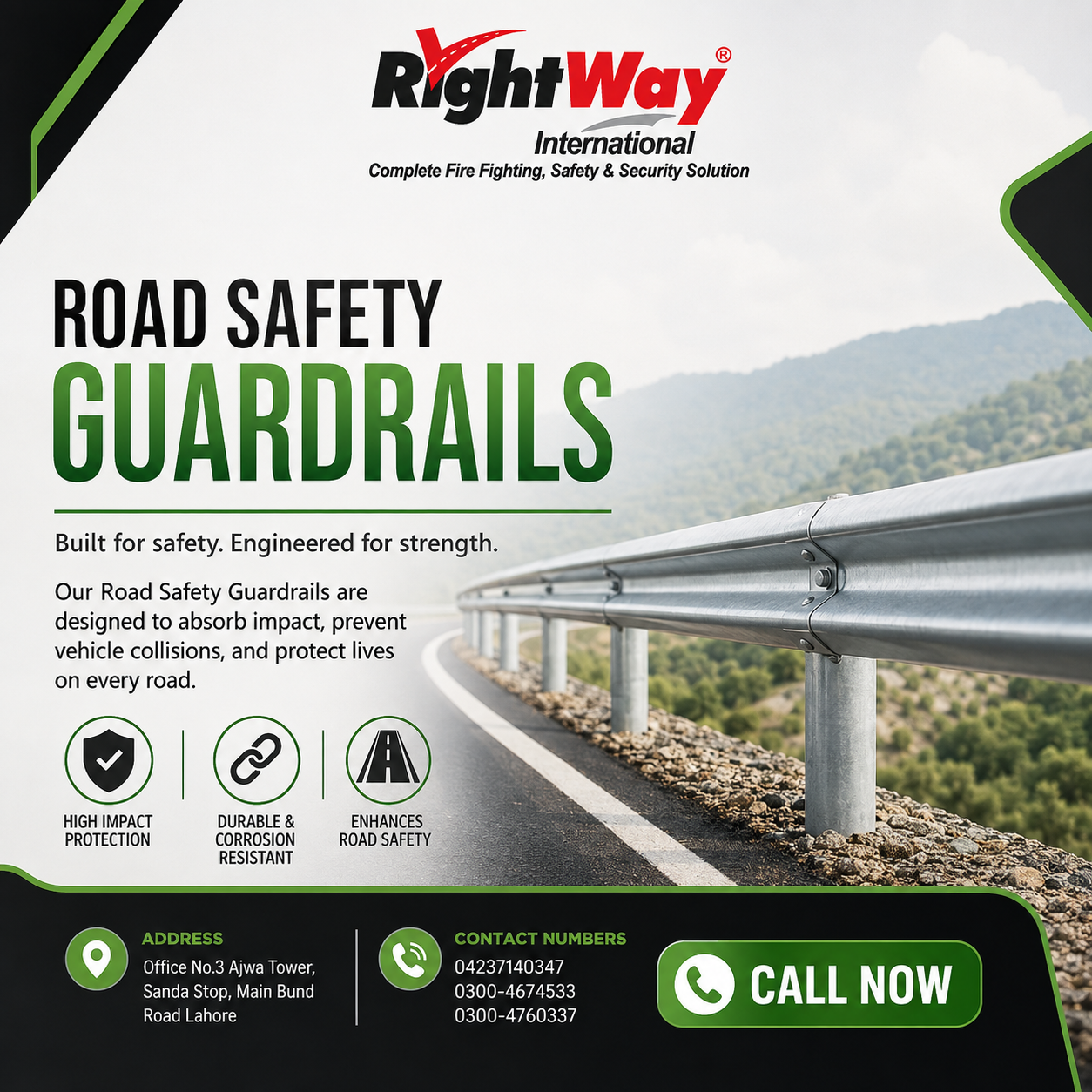
Road Safety Guardrails Types Uses Benefits & Buying Guide These are essential roadside safety systems that help protect vehicles, drivers, passengers, pedestrians, and nearby infrastructure. They provide a physical barrier between moving vehicles and hazards such as steep slopes, bridges, trees, buildings, poles, and other roadside obstacles.
Moreover, road safety guardrails help guide vehicles back toward the roadway when they leave their normal path. Therefore, they play an important role in modern road traffic safety systems.
What Are Road Safety Guardrails?
A road safety guardrail is a protective barrier installed along roads, highways, bridges, curves, medians, and other areas where vehicles may face roadside hazards.
Typically, guardrails consist of metal beams, support posts, spacers, and mounting hardware. When installed correctly, the system can help reduce the severity of certain vehicle run-off-road incidents.
Common names include:
- Road safety guardrails
- Highway guardrails
- Roadside guardrails
- Traffic safety barriers
- Highway safety barriers
- Road crash barriers
- Steel road barriers
- Road protection barriers
- Highway crash barriers
- Roadside safety barriers
- W-beam guardrails
- Metal road guardrails
Why Are Road Safety Guardrails Important?
Vehicles can leave the roadway because of sharp curves, poor weather, driver error, road conditions, or unexpected obstacles. Consequently, roadside hazards can increase the risk of serious accidents.
Road safety guardrails create a protective boundary between traffic and dangerous roadside areas.
They can help:
- Reduce roadside hazards
- Protect vehicles and occupants
- Separate traffic from dangerous areas
- Protect bridges and elevated roads
- Guide vehicles away from obstacles
- Improve roadside safety
- Protect pedestrians and nearby infrastructure
- Support safer highway design
Therefore, guardrails can become an important part of a broader road safety infrastructure.
Types of Road Safety Guardrails
1. W-Beam Guardrails
W-beam guardrails are among the most commonly used roadside barrier systems. Their W-shaped steel profile provides structural strength while helping redirect vehicles during certain impacts.
They are commonly used on highways, rural roads, curves, bridges, and roadside sections.
2. Thrie-Beam Guardrails
Thrie-beam guardrails have a deeper profile than W-beam systems. As a result, they can provide additional strength for selected high-risk applications.
They may suit bridges, elevated roads, medians, and locations requiring stronger roadside protection.
3. Highway Steel Guardrails
Steel highway guardrails provide durable roadside protection and can withstand demanding outdoor conditions when manufacturers use suitable materials and protective coatings.
Therefore, they are widely suitable for highways, major roads, industrial routes, and commercial roadways.
4. Bridge Guardrails
Bridge safety guardrails protect vehicles from leaving bridge decks and other elevated sections. They can also work alongside appropriate bridge barriers and transition systems.
5. Flexible Road Barriers
Some flexible road safety barriers use specially designed systems that absorb and manage impact energy. Consequently, they can provide suitable protection for selected roads and high-risk locations.
Where Are Road Safety Guardrails Used?
Road safety guardrails can support safety in many locations, including:
- Highways
- Motorways
- Rural roads
- Urban roads
- Sharp bends
- Road curves
- Bridges
- Flyovers
- Elevated roads
- Road medians
- Mountain roads
- Sloped roads
- Tunnels and approaches
- Industrial roads
- Construction zones
In addition, engineers may install guardrails near steep drops, drainage channels, trees, utility poles, buildings, and other roadside hazards.
Benefits of Road Safety Guardrails
High-quality highway safety guardrails provide several important benefits.
First, they improve roadside protection. Guardrails create a physical barrier between traffic and hazardous roadside areas.
Second, they help manage vehicle run-off-road incidents. A properly designed barrier can help redirect a vehicle toward the roadway under suitable impact conditions.
Furthermore, guardrails protect infrastructure. They can help shield bridge structures, signs, poles, drainage areas, and other vulnerable roadside assets.
In addition, they improve road organization. Guardrails clearly define roadway edges and separate traffic from certain hazards.
Finally, durable steel construction can provide long-term performance when the system receives proper installation and maintenance.
Important Features of High-Quality Road Safety Guardrails
When selecting a road safety guardrail system, consider:
- Strong steel construction
- Suitable beam profile
- Durable support posts
- Corrosion protection
- Proper mounting hardware
- Impact performance
- Reflective visibility
- Correct barrier height
- Appropriate post spacing
- Reliable connections
- Weather resistance
- Professional installation
Moreover, the complete barrier system should match the road design, traffic conditions, and applicable safety requirements.
How to Choose the Right Road Safety Guardrail
1. Identify the Road Conditions
First, assess the road type, traffic volume, vehicle speeds, curves, slopes, and roadside hazards.
2. Identify the Hazard
Next, determine what the guardrail needs to protect against. For example, the hazard could include a steep drop, bridge edge, tree, pole, water channel, or other obstacle.
3. Select the Guardrail Type
Choose a suitable W-beam, thrie-beam, bridge barrier, or other approved road safety barrier system according to the application.
4. Check Material Quality
Furthermore, consider steel quality, galvanization, corrosion protection, beam thickness, post strength, and connection hardware.
5. Consider Visibility
Reflective elements and appropriate markings can help drivers recognize the barrier, particularly during nighttime or poor visibility.
6. Follow Safety Standards
Finally, ensure that the selected guardrail system meets the applicable local and project-specific road safety requirements.
Road Safety Guardrail Installation
Correct installation plays an important role in guardrail performance. Therefore, trained professionals should install guardrail systems according to the approved design.
A typical installation process includes:
- Inspect the roadside area.
- Identify hazards and barrier limits.
- Mark the required post locations.
- Prepare the installation area.
- Install the support posts.
- Attach beams and connection hardware.
- Check alignment and height.
- Install suitable end treatments and transitions.
- Inspect the complete system.
However, exact installation requirements can vary according to the road design, barrier system, site conditions, and applicable standards.
Maintenance of Road Safety Guardrails
Regular inspection helps maintain the performance and visibility of roadside safety barriers.
Inspect guardrails for:
- Rust and corrosion
- Bent beams
- Damaged posts
- Loose bolts
- Broken connections
- Poor alignment
- Damaged reflectors
- Missing components
- Impact damage
In addition, repair damaged sections promptly and replace components when necessary.
Road Safety Guardrails in Pakistan
Road Safety Guardrails in Pakistan can support safer transportation infrastructure on highways, motorways, bridges, rural roads, urban roads, industrial routes, and other high-risk locations.
When purchasing road safety guardrails in Pakistan, consider steel quality, beam design, galvanization, post strength, impact performance, installation requirements, corrosion resistance, visibility, and expected service life.
Moreover, buyers should select a complete guardrail system according to the specific road conditions rather than choosing products based only on price.
Road Safety Guardrails vs Concrete Barriers
Steel road guardrails and concrete barriers serve different purposes.
Guardrails can provide a more flexible roadside protection system and can suit locations where engineers need a barrier along road edges or curves.
Concrete barriers, meanwhile, provide a rigid physical separation and often suit medians, work zones, and specific high-containment applications.
Therefore, engineers should select the barrier type according to the road layout, hazard, traffic conditions, and applicable safety requirements.
Best Practices for Road Safety Guardrails
For effective roadside protection:
- Identify roadside hazards carefully
- Select a suitable guardrail system
- Use quality materials
- Follow the approved design
- Maintain correct post spacing
- Install suitable end treatments
- Use appropriate transitions
- Maintain proper visibility
- Inspect guardrails regularly
- Repair impact damage promptly
- Replace damaged components
- Follow applicable road safety standards
As a result, proper selection, installation, inspection, and maintenance can help maintain an effective roadside safety system.
Frequently Asked Questions
What is a road safety guardrail?
A road safety guardrail is a roadside barrier designed to help protect vehicles from certain roadside hazards and support safer vehicle movement.
Where are road safety guardrails used?
They are commonly used on highways, motorways, bridges, sharp curves, mountain roads, medians, elevated roads, and other locations with roadside hazards.
What materials are used for road guardrails?
Steel is commonly used for road guardrail systems because it provides strength and durability. Galvanized steel can also provide improved corrosion protection.
What is a W-beam guardrail?
A W-beam guardrail uses a W-shaped steel beam attached to support posts. It is a common roadside barrier design used for various road safety applications.
Do road guardrails prevent accidents?
Guardrails do not prevent every accident. However, properly designed and installed systems can help reduce certain roadside risks and manage some vehicle run-off-road incidents.
How often should road guardrails be inspected?
Guardrails should receive regular inspections, particularly after vehicle impacts, severe weather, construction activity, or other events that may cause damage.
Road Safety Guardrails provide an important layer of protection for highways, bridges, curves, slopes, medians, and other roadside locations. Furthermore, they can help protect vehicles, passengers, infrastructure, and other road users from specific roadside hazards.
Therefore, choosing the right road safety guardrail system requires careful consideration of the road layout, hazard type, traffic conditions, material quality, impact requirements, installation method, and applicable safety standards.
With proper design, professional installation, and regular maintenance, highway guardrails and roadside safety barriers can contribute to safer and more reliable road infrastructure.
Road Safety Bollards
Vehicles can accidentally enter pedestrian areas, building entrances, parking zones, and restricted spaces. Road safety bollards create a clear physical boundary between vehicles and protected areas.
For example, businesses can install bollards around entrances to reduce the risk of accidental vehicle impact. Similarly, factories can use them to separate pedestrians from vehicle routes. Read More