




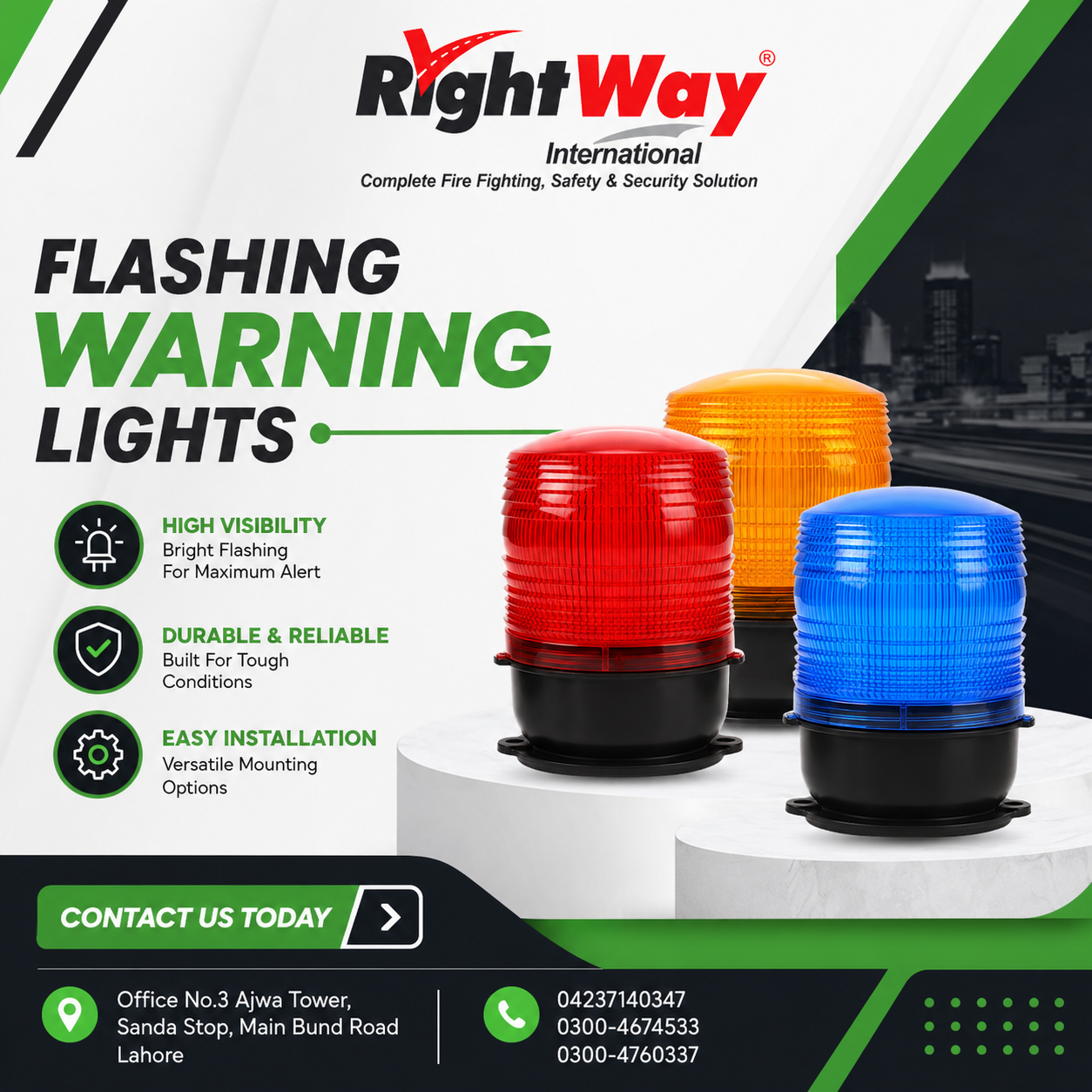
Flashing Warning Lights: Types Uses Benefits & Buying Guide are important visual safety devices used to alert drivers, pedestrians, workers, and nearby people about hazards, emergency situations, vehicles, and restricted areas. They provide highly visible warning signals, especially during night time, poor weather, roadwork, and low-visibility conditions.
Moreover, flashing warning lights are widely used in road safety, construction zones, emergency vehicles, industrial facilities, parking areas, and security applications.
What Are Flashing Warning Lights?
A flashing warning light is a safety lighting device that produces a bright, intermittent or rotating light to attract attention. Depending on the application, these lights may use LED technology, strobe patterns, rotating mechanisms, or other warning-light systems.
Common names include:
- Flashing warning lights
- LED warning lights
- Emergency warning lights
- Strobe warning lights
- Road warning lights
- Traffic warning lights
- Hazard warning lights
- Vehicle warning lights
- Amber warning lights
- Safety flashing lights
Why Are Flashing Warning Lights Important?
Drivers and pedestrians may not always notice hazards quickly, particularly at night or in poor visibility. Flashing warning lights provide an immediate visual warning that helps draw attention to potential dangers.
They can help:
- Improve hazard visibility
- Alert approaching drivers
- Increase roadside safety
- Mark temporary hazards
- Improve construction-zone visibility
- Support emergency operations
- Identify vehicles and restricted areas
- Improve nighttime safety
Therefore, warning lights are an important part of modern road traffic safety systems.
Types of Flashing Warning Lights
1. LED Flashing Warning Lights
LED flashing warning lights use energy-efficient LEDs to produce bright and highly visible warning signals. They are commonly used on vehicles, roads, machinery, and safety equipment.
2. Amber Flashing Warning Lights
Amber warning lights are widely used for road maintenance, construction vehicles, recovery vehicles, and other situations where drivers need to be alerted to potential hazards.
3. Red Flashing Warning Lights
Red flashing lights are commonly associated with emergency situations and specific emergency or safety applications. Their use should follow applicable local regulations.
4. Strobe Warning Lights
Strobe warning lights produce rapid flashes that can attract attention from a considerable distance. They are suitable for selected industrial, emergency, and safety applications.
5. Solar Flashing Warning Lights
Solar warning lights use solar panels to charge an internal battery. They can be useful for locations where connecting to an electrical supply is difficult.
Where Are Flashing Warning Lights Used?
Flashing warning lights can be installed or mounted in many locations, including:
- Highways
- Construction zones
- Roadwork areas
- Emergency vehicles
- Tow trucks
- Security vehicles
- Industrial facilities
- Warehouses
- Parking areas
- Pedestrian crossings
- Traffic control points
- Machinery and equipment
- Railway and roadside locations
They can also be used around temporary hazards, restricted areas, gates, and other locations requiring increased visibility.
Benefits of Flashing Warning Lights
High-quality flashing safety lights provide several important benefits.
First, they improve visibility. Bright flashing signals can help attract attention during both daytime and nighttime conditions.
Second, they provide early warning. Approaching drivers and pedestrians can recognize a hazard before reaching the affected area.
Furthermore, LED technology can offer efficient operation and long service life when properly selected and maintained.
Finally, flashing warning lights can improve workplace and roadside safety by clearly highlighting vehicles, equipment, hazards, and work areas.
Important Features to Consider
When selecting flashing warning lights, consider:
- High-intensity LED output
- Suitable flash patterns
- Weather-resistant construction
- Durable housing
- Wide visibility angle
- Low power consumption
- Reliable mounting system
- Long operating life
- Suitable voltage
- Day and night visibility
- Water and dust resistance
- Easy maintenance
The light should also be appropriate for its intended road, vehicle, industrial, or emergency application.
How to Choose the Right Flashing Warning Light
1. Identify the Application
First, determine whether the light will be used for roadwork, construction, emergency vehicles, industrial machinery, or another purpose.
2. Choose the Appropriate Color
Select the warning-light color according to the application and applicable local regulations.
3. Check Visibility
Consider brightness, viewing angle, mounting height, and expected operating conditions.
4. Consider Power Requirements
Choose between wired, battery-powered, or solar-powered options according to the installation location.
5. Check Durability
For outdoor applications, choose lights with suitable protection against rain, dust, vibration, and temperature changes.
Installation and Maintenance
Correct installation is essential for effective warning-light performance. Install the light where it remains clearly visible and does not create an additional hazard.
Regularly inspect flashing warning lights for:
- Damaged lenses
- Loose connections
- Broken mounting brackets
- Water or dust ingress
- Reduced brightness
- Electrical problems
- Damaged wiring
Clean the lens and repair or replace damaged components when necessary.
Flashing Warning Lights in Pakistan
Flashing Warning Lights in Pakistan are useful for road construction, highway maintenance, emergency vehicles, industrial facilities, security applications, and traffic-management projects.
When purchasing flashing warning lights in Pakistan, consider brightness, LED quality, housing durability, power requirements, weather resistance, mounting options, operating voltage, and suitability for the intended application.
Buyers should select a reliable safety-lighting system based on actual operating conditions rather than price alone.
Flashing Warning Lights vs Rotating Warning Lights
Flashing warning lights use intermittent light patterns to attract attention, while rotating warning lights create a moving beam through a rotating mechanism or optical system.
Both can provide effective visual warnings. However, the best option depends on the application, visibility requirements, installation location, power supply, and applicable safety regulations.
Best Practices
For effective use of flashing warning lights:
- Select the correct light color
- Choose sufficient brightness
- Use durable equipment
- Install lights in visible locations
- Follow applicable regulations
- Check electrical connections
- Keep lenses clean
- Inspect lights regularly
- Replace damaged components
- Test warning lights periodically
Frequently Asked Questions
What are flashing warning lights?
Flashing warning lights are safety devices that produce intermittent bright signals to alert drivers, pedestrians, workers, or nearby people to hazards or emergency situations.
Where are flashing warning lights used?
They are commonly used on highways, construction sites, emergency vehicles, industrial equipment, parking areas, and roadwork zones.
Are LED flashing warning lights better?
LED warning lights are popular because they can provide high brightness, efficient power consumption, and long operating life when properly designed and maintained.
What colors are used for warning lights?
Common colors include amber, red, blue, and other colors depending on the application and local regulations.
Are flashing warning lights suitable for outdoor use?
Yes, many models are designed for outdoor environments. However, buyers should check their weather, water, dust, and temperature resistance before installation.
Flashing Warning Lights provide an effective visual warning for roads, construction areas, emergency vehicles, industrial facilities, and other hazardous locations. They help improve visibility and alert road users, workers, and pedestrians to potential dangers.
Therefore, selecting the right flashing warning light system requires consideration of brightness, color, durability, power source, visibility, installation requirements, and applicable safety regulations.
With proper selection, installation, and maintenance, LED flashing warning lights can contribute to safer roads, workplaces, vehicles, and public areas.
Road Safety Guardrails
Benefits of Road Safety Guardrails
High-quality highway safety guardrails provide several important benefits.
First, they improve roadside protection. Guardrails create a physical barrier between traffic and hazardous roadside areas.
Second, they help manage vehicle run-off-road incidents. A properly designed barrier can help redirect a vehicle toward the roadway under suitable impact conditions.
Furthermore, guardrails protect infrastructure. They can help shield bridge structures, signs, poles, drainage areas, and other vulnerable roadside assets.
In addition, they improve road organization. Guardrails clearly define roadway edges and separate traffic from certain hazards.
Finally, durable steel construction can provide long-term performance when the system receives proper installation and maintenance. Read More